What is an Academic Journal?
An academic journal is a peer-reviewed scientific publication that publishes scientific research, original articles, and expert opinions.
index
An academic journal is a peer-reviewed scientific publication that publishes scientific research, original articles, and expert opinions. These journals, which are produced for specific disciplines or multidisciplinary fields, feature content reviewed by expert referees to ensure the accuracy and reliability of the information. In this respect, academic journals are one of the fundamental tools of scientific communication.
Scientific journals are one of the cornerstones of the academic world. Researchers and academics share their new findings, facts, theories, and methods through journals. They enable the accumulation of knowledge and the building of new studies upon it.
Journals are also at the center of scientific quality control. Submitted articles are carefully evaluated by expert reviewers in the field. This process ensures the reliability and academic value of published works.
Journals play a critical role in academic careers. Publishing enables researchers to gain academic titles, receive project and funding support, and gain recognition in the scientific community. Journals provide a valuable resource for future research by making each study a permanent scientific record. Therefore, scientific journals are indispensable platforms for both sharing knowledge and academic visibility.
Writing an academic article is often a challenging journey. Struggling to write the first sentence, grappling with data, analyses collapsing repeatedly, morale being dampened by referee comments… All of these are a natural part of the research process. Many young researchers experience the same feelings when writing their first paper: “Is it good enough?”, “Where should I start?”, “Do these results really contribute to science?”
In fact, these challenges are the most valuable aspect of academic production. Because a scientific paper:
Every time you edit a paragraph, adjust a graph, or add a source, you are actually making a small contribution to science. Peer reviews can sometimes be exhausting, but each comment makes your article stronger.
When the article is finally published, your name appears in the scientific record. Perhaps years later, a researcher will be inspired by your work, or perhaps a project will begin because of that article. That is why writing an article is not just a requirement, but also a mark left for the future. Every citation and source addition represents a bridge your work builds with the existing scientific knowledge.
Scientific production sometimes progresses slowly, but every piece of work that emerges enriches the researcher both personally and academically.
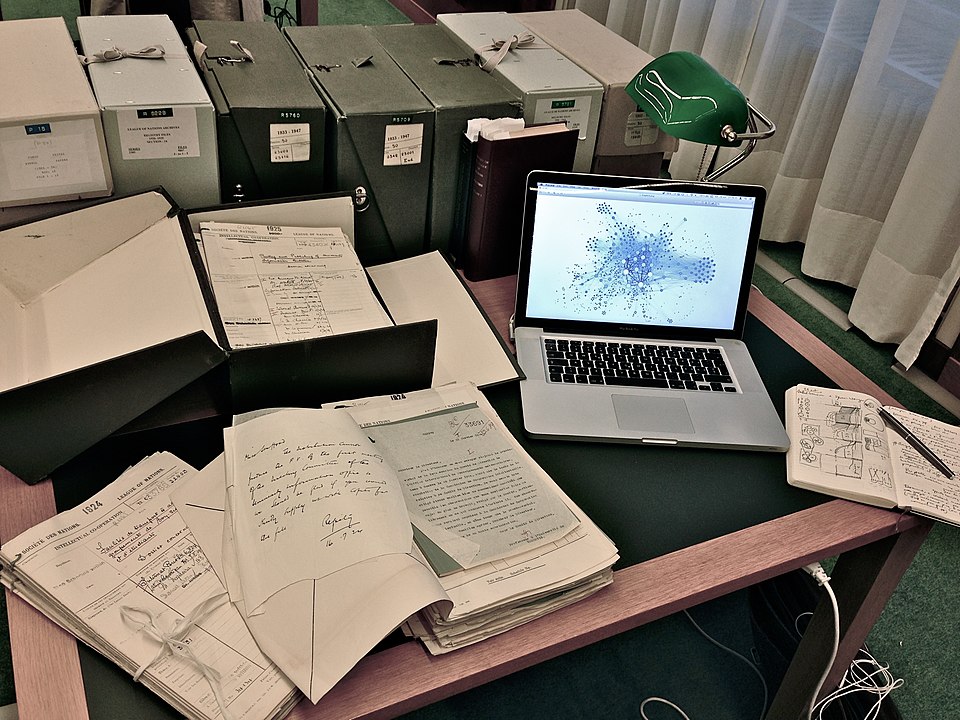
(Image: Humanités Numériques – Wikimedia Commons | Reference: Wikimedia)
The most critical stage for an article to be published in a scientific journal is the peer review process. The article is reviewed and evaluated by independent experts who are knowledgeable about the subject. This evaluation is conducted in terms of the methodological accuracy of the study, the reliability of the findings, and its scientific contribution. If necessary, reviewers provide corrections and suggestions; authors revise their articles based on this feedback. This process ensures the reliability of scientific publishing and academic quality.
Journals usually have one or more referees. Referee types can be classified as follows:
The peer review process not only enhances the scientific value of the article but also contributes to the academic development of researchers. Authors can reshape their work with a more robust methodology and consistent arguments thanks to peer reviews.
Scientific publishing is based on specific ethical standards. Researchers are obligated to avoid plagiarism, present data accurately and transparently, cite sources correctly, and disclose conflicts of interest. These rules both maintain the trust of the scientific community and ensure that research is objective and reproducible. Ethical violations can result in article rejection or retraction, so researchers must pay the utmost attention to ethical rules.
It can be said that more than 70% of journals in Turkey are based on the TRDizin, COPE, and ICMJE trio.
The TÜBİTAK ULAKBİM TR Index and Academic Journals Scientific Publishing Seminar series is an important reference source for detailed and up-to-date information on academic publishing processes in Turkiye, TR Index requirements, and ethical standards.
Academic journals significantly increase the visibility of research by being listed in national and international indexes. For example, international indexes such as Scopus and Web of Science (WoS) indicate the scientific quality and impact level of journals. In Turkey, national indexes such as ULAKBİM and TRDİZİN ensure that research is recognized nationwide.
Having your article included in these indexes offers several significant advantages:
Therefore, having your article included in both national and international indexes is a critical factor that increases the researcher's visibility and academic impact.